

Prescription Drug Plans
Made Simple
At MediPlans NJ, we understand the importance of affordable and comprehensive prescription drug coverage.

Get guidance on the first steps to explore your Medicare options.
Understand your choices and how employer coverage may impact enrollment.
Learn the enrollment process, timelines, and important information.
Compare Medicare coverage choices to find the right fit for you.
Get clarity on Medicare costs and how to plan for your healthcare expenses.
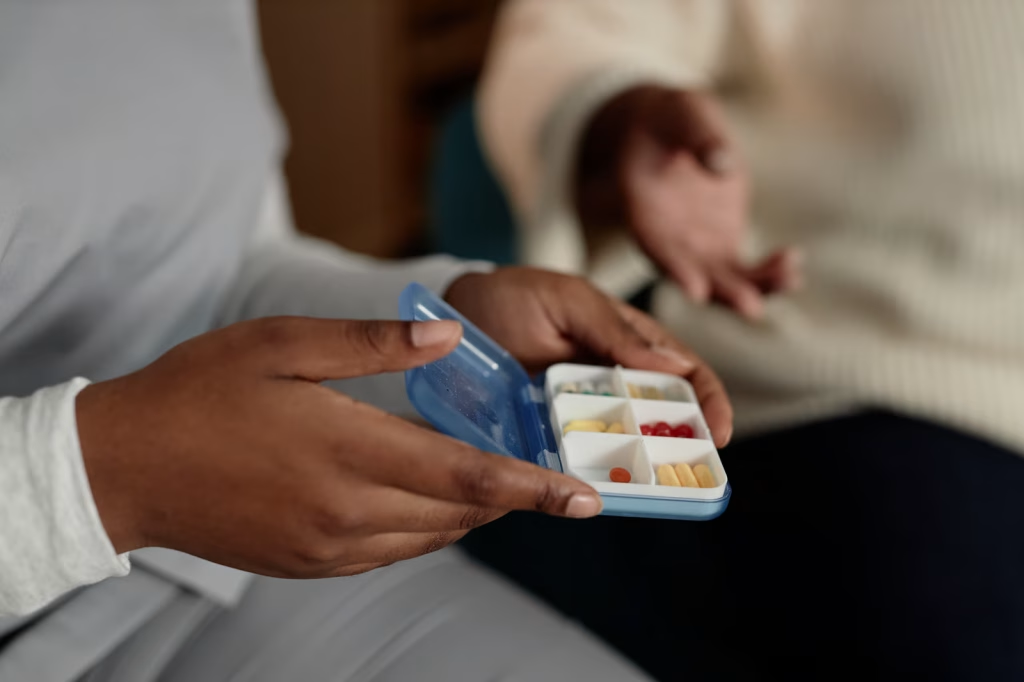
Our Prescription Drug Plans (Part D) are designed to provide you with access to the medications you need while keeping costs manageable.
With a range of plan options from various insurance carriers, we tailor our Prescription Drug Plans to fit your specific needs and budget. Whether you’re managing chronic conditions or simply need occasional prescriptions, we’ve got you covered.
Medicare Prescription Drug Plans (Part D): Everything You Need to Know
Medicare Prescription Drug Coverage (officially known as Medicare Part D) helps pay for outpatient prescription medications.
Original Medicare (Parts A and B) does not cover self-administered medications you pick up at a retail pharmacy. Therefore purchasing a Part D Plan is an essential part of your Medicare Planning.
Part D is offered exclusively through private insurance companies approved by Medicare. You can obtain Part D coverage in two ways:
-
- Standalone Prescription Drug Plan (PDP): Paired with Original Medicare and a Medigap (Supplement) policy.
- Medicare Advantage Prescription Drug Plan (MAPD): Built directly into an all-in-one Medicare Advantage plan
How Prescription Drug Coverage Functions
The Phases of Part D
Federal update rules have streamlined the Part D structure, making out-of-pocket expenses far more manageable and predictable for policyholders. The old "coverage gap" phase is no longer part of the system. Instead, your drug coverage progresses through three clear phases each calendar year:
| THE 3 STAGES OF MEDICARE PART D COVERAGE | |
|---|---|
| 1. DEDUCTIBLE STAGE | You pay 100% of retail drug costs until you meet your plan's deductible (Max $615). |
| 2. INITIAL COVERAGE STAGE | You pay copays or coinsurance (e.g., $5, $40) until your out-of-pocket spend hits $2,100. |
| 3. CATASTROPHIC STAGE | YOU PAY $0! Once you reach the $2,100 cap, the plan pays 100% of covered drug costs for year. |
Stage 1: The Annual Deductible
- Under federal guidelines, no Part D plan can set a deductible higher than $615 for 2026. These deductibles increase every year.
- Many plans feature a $0 deductible for low-cost generic drugs (Tiers 1 and 2), applying the deductible only to brand-name or specialty medications.
Stage 2: Initial Coverage
- After meeting your deductible, you pay a small copay (a fixed dollar amount) or coinsurance (a percentage of the drug cost) every time you fill a prescription.
- You remain in this stage until your total out-of-pocket spending on covered medications reaches $2,100 .
Stage 3: Catastrophic Coverage ($0 Coinsurance Cap)
- Once your true out-of-pocket spending (what you pay in deductibles, copays, and coinsurance) hits $2,100, you enter the Catastrophic Coverage phase.
- You pay $0 for all Medicare-covered prescription drugs for the remainder of the calendar year.
Special Payment Option (MPPP): If you take high-cost medications early in the year, you can opt into the Medicare Prescription Payment Plan. This voluntary program allows you to spread your out-of-pocket pharmacy costs into manageable monthly installments billed by your plan, rather than paying the full amount at the pharmacy counter.
Understanding Formularies and Tier Structures
Every Part D plan maintains a Formulary—a specific list of prescription drugs covered by that plan. Formularies group medications into Tiers, which dictate your out-of-pocket cost:
| TYPICAL DRUG FORMULARY TIERS | ||
|---|---|---|
| TIER | DRUG CATEGORY | TYPICAL COST-SHARE |
| Tier 1 | Preferred Generic | Lowest ($0 – $5 copay) |
| Tier 2 | Non-Preferred Generic | Low ($5 – $15 copay) |
| Tier 3 | Preferred Brand | Moderate ($35–$47 copay) |
| Tier 4 | Non-Preferred Drug | Higher (30%–50% coins.) |
| Tier 5 | Specialty Tier | Highest (Coinsurance) |
Advisor Insight: "Never select a Part D plan based on the monthly premium alone. A plan with a $15/month premium might not cover your specific brand-name medication, costing you thousands more at the pharmacy than a plan with a $40/month premium that includes your drug on Tier 3." Always enter your medications BEFORE choosing a plan.
The Part D Late Enrollment Penalty (LEP)
Medicare Part D is voluntary, but if you go without "creditable" prescription drug coverage for 63 or more consecutive days after your Initial Enrollment Period ends, you will face a permanent financial penalty.
| TYPICAL DRUG FORMULARY TIERS | ||
|---|---|---|
| 1% of the National Base Beneficiary Premium X Number of Uncovered Months Delayed = Lifetime Monthly Penalty Added to Your Drug Plan Premium |
||
Creditable Coverage Defined:
Health coverage (such as active employee group coverage or VA benefits) that is expected to pay, on average, at least as much as standard Medicare drug coverage.
Permanent Addition:
The calculated penalty is added to your monthly Part D premium for as long as you carry Medicare prescription drug coverage.
When Can You Enroll or Change Drug Plans?
You can enroll in or switch your Part D plan during specific enrollment windows:


Extra Help (Low-Income Subsidy)
If you have limited income and resources, you may qualify for the federal Extra Help program (also known as the Low-Income Subsidy / LIS).
Frequently Asked Questions ?
If your plan requires Prior Authorization, your prescribing physician must submit documentation to the plan showing that the medication is medically necessary before the plan will cover it. If denied, your physician can assist you in filing an official coverage appeal.
Yes, it is strongly recommended. Signing up for a low-cost, basic standalone Part D plan when you turn 65 protects you against future health changes while locking in continuous creditable coverage to avoid lifetime late-enrollment penalties.
No. If you have a Medicare Advantage plan that includes prescription drug coverage (MAPD), purchasing a separate standalone Part D plan will automatically disenroll you from your Medicare Advantage plan and return you to Original Medicare.
If a drug requires Prior Authorization, your doctor must send clinical records to the insurance provider confirming that the medication is necessary for your care. If the plan declines coverage, your physician can submit an official request to appeal the decision.
No. If you belong to a Medicare Advantage plan that includes prescription benefits, buying a separate standalone drug policy will automatically end your Medicare Advantage membership and switch you back to Original Medicare.
I Will Guide You Through the Process of Selecting the Right Prescription Drug Plan for You.
Ensuring that you understand your coverage options, copayments, and formularies. We'll also help you explore opportunities for potential savings, such as generic alternatives and mail-order pharmacy options.

Credentials & Compliance
Written by: MediPlans NJ
Credentials: Licensed Independent Health & Medicare Insurance Advisors
Regulatory Compliance: Fully Compliant with Centers for Medicare & Medicaid Services (CMS) Guidelines
Editorial Integrity: MediPlans NJ provides transparent, unbiased evaluations across all Medicare Advantage, Medigap, and Part D options. Our goal is to help you review your coverage each fall without sales pressure, ensuring your health needs and prescription drug requirements are fully protected for the upcoming year.